Custom padded envelopes stay ship-ready when you store them flat, dry, shaded and boxed, rotate the oldest cartons first and seal each flap with firm edge-to-edge pressure. Custom Padded Envelopes offers poly, kraft-look, metallic foil and rigid styles, and each handles moisture, scuffs and bending differently, so durability starts with matching the style to your product.
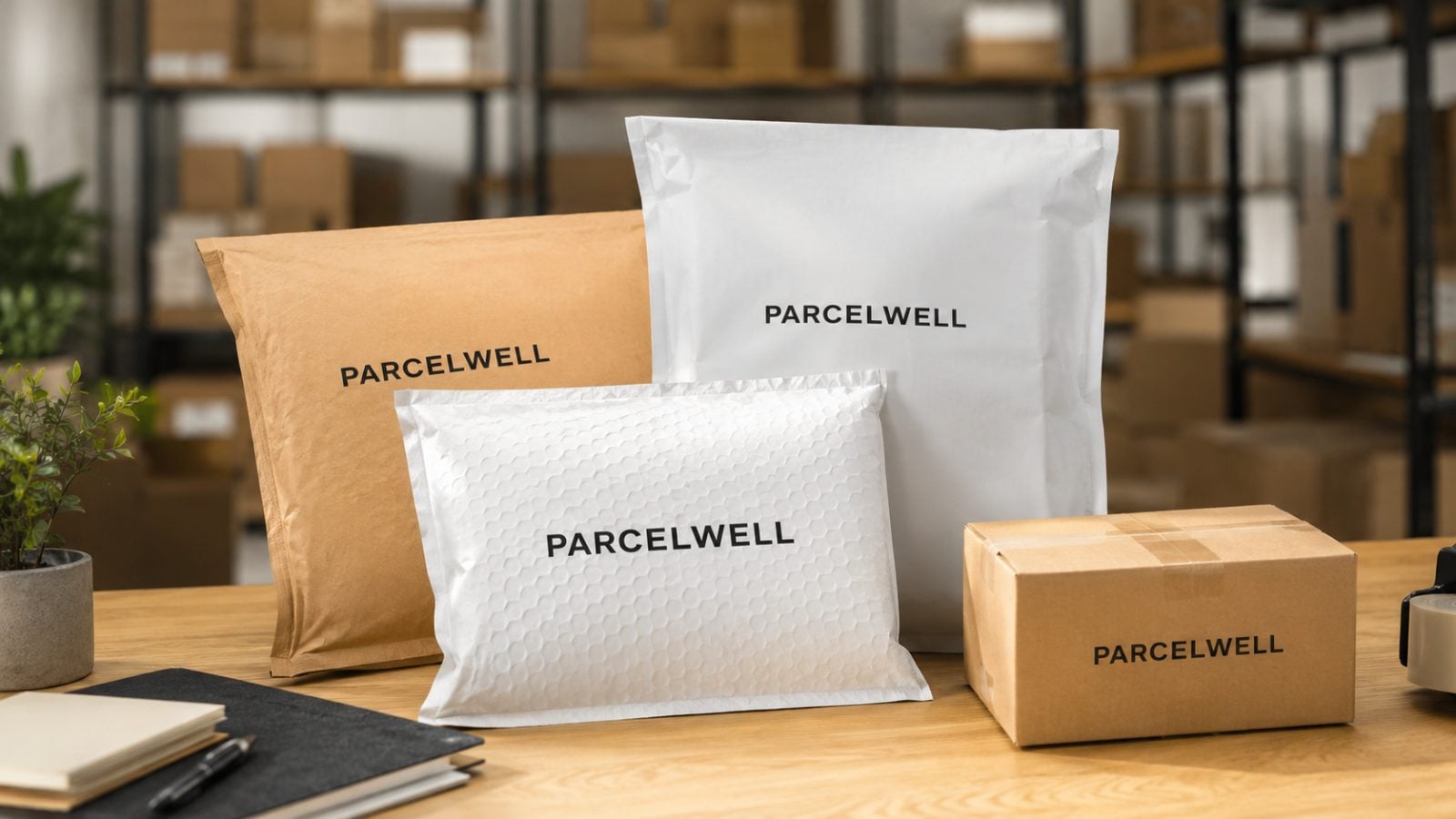
- Store padded envelopes flat, dry, shaded and in their cartons
- Poly shells shed rain; kraft-look faces show water marks sooner
- Rigid padded mailers keep prints and cards flat
- Rotate stock oldest first to keep adhesive fresh
- Minimum order is 12, so you can reorder steadily instead of stockpiling
How durable are custom padded envelopes in the mail?
Custom padded envelopes are built to survive the parcel stream: a printed outer layer that resists scuffs and moisture, a cushioning inner layer that absorbs knocks, and a peel-and-seal strip that holds the flap closed through sorting machines and doorstep drops. How well a batch performs depends on which style you order and how you treat the stock before it ever leaves your shelf.
Most damage blamed on a mailer actually starts at the packing station. An envelope stored flat and dry, filled to the right size and sealed on a clean flap will usually arrive looking the way it left. An envelope that sat in a damp corner, was overstuffed or was sealed over dust is the one that splits or pops open.
This guide covers each part of the envelope, how the four main styles from Custom Padded Envelopes behave in real shipping conditions, and the storage habits that keep the last envelope in a box as reliable as the first.
What are the layers of a padded envelope, and what does each one do?
A padded envelope has three working parts: the outer shell that carries your print, the padding that protects the product, and the closure that keeps everything inside. Knowing which layer does which job tells you what to check when a shipment goes wrong.
- Outer shell. Poly film on the bubble-lined poly mailer and standard padded mailer, a paper-textured face on the kraft-look padded envelope, a reflective film on the metallic foil padded mailer, and a stiff board face on the rigid padded mailer. The shell takes the abrasion, the rain and the printed logo.
- Padding. A bubble lining on most styles, which spreads the force of a drop across the surface. The rigid padded mailer adds stiffness instead, which matters more for flat items than cushioning.
- Closure. A self-seal adhesive strip under a release liner. Once the liner comes off, the strip bonds to the opposite flap and should not be reopened without tearing.
When you compare styles, compare all three layers. A beautiful shell with the wrong padding for your product is still the wrong envelope.
Which padded envelope style holds up best for your products?
The best padded envelope style for durability is the one matched to your product’s real risk: moisture, crushing, bending or surface scuffs. Each style on Custom Padded Envelopes handles a different risk well, and the table below is a quick way to choose.
| Style | Strongest at | Watch out for |
|---|---|---|
| Bubble-lined poly mailer | Rain, damp porches and everyday knocks | Sharp corners on hard products can press through if the size is too tight |
| Standard padded mailer | All-round protection for soft and boxed goods | Overfilling, which strains the seam and the seal |
| Kraft-look padded envelope | Natural brand look with solid cushioning | Long exposure to wet weather, since the paper-style face shows water marks sooner than film |
| Metallic foil padded mailer | Premium look that keeps its shine in transit | Fingerprints and scuffs on the reflective surface before packing |
| Rigid padded mailer | Prints, cards, photos and anything that must stay flat | Bending the mailer to fit a thick item, which defeats the stiff face |
If your product ships through wet climates, lean toward poly. If it must stay flat, the rigid style earns its place. For small items such as rings or earrings, the small jewelry padded envelope keeps a tiny box from sliding around inside.
How should you store custom padded envelopes before you use them?
Store custom padded envelopes flat, dry, out of direct sun and away from heat sources, in their original cartons until you need them. Those four habits protect the adhesive strip, the printed surface and the shape of the padding, which are the three things that degrade on a neglected shelf.
- Keep them flat. Envelopes stood on edge or crushed under heavy stock can crease, and a creased flap seals poorly. Stack cartons flat on a shelf rather than on the floor.
- Keep them dry. Moisture is hardest on kraft-look envelopes and on the release liner of every style. A garage or basement that feels damp is the wrong place for packaging.
- Keep them shaded. Strong sunlight through a window can fade printed colors over time and warm the adhesive. A closed cupboard or a shelf away from the window works well.
- Keep them away from heat. Radiators, heaters and hot vans soften adhesive. A softened strip can bond to the liner or lose grip later.
- Keep them boxed. The carton blocks dust, which is the quiet enemy of a good seal.
Pull only a working stack to the packing table each day and leave the rest boxed. That single habit keeps most of your stock in the condition it arrived in.
Why do padded envelope seals fail, and how do you prevent it?
Padded envelope seals usually fail for one of four reasons: dust or fibers on the adhesive, an overfilled envelope pulling the flap open, a strip weakened by heat or age, or a flap pressed down only at the center. Each cause has a simple fix at the packing station.
- Dust and fibers. Packing paper, tissue and fabric products shed lint. Peel the liner at the last moment, never in advance, and keep the strip clear of your fingers.
- Overfilling. If the flap only just reaches the body of the envelope, the adhesive is fighting the contents all the way to the customer. Move up a size instead.
- Tired adhesive. Old stock stored warm is the most likely to disappoint. Rotate cartons so the oldest envelopes are used first.
- Uneven pressure. Run your hand firmly along the full width of the flap, edge to edge, after sealing. Corners lift first when they are skipped.
If you see seals failing across a whole carton rather than on single envelopes, check where that carton was stored and contact Custom Padded Envelopes with photos so the batch can be reviewed.
Will the printed logo on padded envelopes scuff or fade?
The printed logo on custom padded envelopes is designed to survive normal shipping handling, but the finish you pick and the way you store stock both affect how the logo looks on arrival. Most visible wear comes from rubbing against other parcels, sunlight on stored stock and rough handling at the packing table.
Matte poly and kraft-look surfaces hide light scuffs well. The metallic foil padded mailer looks striking but shows handling marks sooner, so pack those with clean, dry hands and keep them in their carton until use. Full-color designs with large solid areas of a dark color tend to show scratches more than designs with open space and smaller logo blocks, which is worth considering at the artwork stage.
The mockup is the right moment to raise durability. Custom Padded Envelopes returns a free mockup within 24 hours with unlimited free revisions, so you can ask whether a lighter background or a smaller dark panel would wear better before you approve. Read how the full-color printed custom padded envelopes work if you are deciding between a simple logo and an all-over design.
How long can a stock of custom padded envelopes sit on the shelf?
A stock of custom padded envelopes can sit on the shelf for a long time when stored flat, dry and cool, but the adhesive strip is the part that ages first, so plan to use stock steadily rather than hoarding years of supply. The printed shell and padding generally outlast the seal.
Rotation solves most shelf-life worries. Label each carton with the date it arrived and pull the oldest first. When you reorder, place new cartons behind older ones rather than in front. If a carton has been sitting much longer than the rest, test a few envelopes before a busy day: peel, seal, wait, and try to lift the flap. A strong bond means the batch is fine.
Ordering in sensible batches also limits shelf time. The minimum order is 12, so a new brand can start small, learn its true usage and size the next run accordingly. Production takes 2 to 4 weeks after design approval, which makes steady reorders practical instead of buying far ahead.
How do padded envelopes handle rain, heat and cold in transit?
Padded envelopes with a poly outer shell handle rain on a porch or in a mail truck well, because film sheds water instead of soaking it up. Kraft-look envelopes cushion just as well but show water marks sooner, and every style benefits from a fully pressed seal so moisture cannot get in at the flap.
Heat matters most before shipping, while envelopes are stored, and for products that are themselves heat-sensitive. A delivery van in summer can get warm, but the bigger risk is stock left in a hot car or a sunny window for weeks. Cold weather can make film feel stiffer, so press seals with a little extra care on winter mornings in an unheated space.
If your customers are spread across wet regions, a bubble-lined poly mailer is the safer default. If you love the kraft-look style for brand reasons, it remains a sound choice in normal conditions; simply place the shipping label and any packing slip pouch on a flat area where water would not pool.
Can customers reuse or recycle your padded envelopes?
Customers can often reuse a padded envelope for a return when it was opened carefully, and some styles are easier to recycle than others depending on the local program. The more durable the envelope you send, the more likely it is to have a second life.
To encourage reuse, open-friendly design helps. A tear strip or clear instructions on the packing slip about cutting along the top edge keep the original seal area intact for a return label. Some brands print a short note on the back flap inviting customers to reuse the mailer, which also keeps the logo in the home for longer.
Recycling depends on the material and on where the customer lives, so avoid promising more than you can confirm. The site’s existing guide to recyclable padded mailers walks through the materials in detail. If reuse is part of your brand story, mention it when you request a quote so the team at Custom Padded Envelopes can suggest a style and artwork layout that suit it.
What should you check when a new batch of padded envelopes arrives?
When a new batch of custom padded envelopes arrives, check the cartons for damage, open one carton fully, and test a handful of envelopes for print, size and seal before moving the stock into storage. Those few minutes catch problems while they are easy to fix.
- Inspect the outer cartons for crushing or water damage from the delivery.
- Compare a printed envelope to your approved mockup: logo position, colors and any text.
- Place your most common product inside to confirm the size fits with room for the flap.
- Peel and seal several envelopes, then try to lift the flaps after a short wait.
- Label the cartons with the arrival date and store them flat, dry and shaded.
If something looks wrong, photograph it before you unpack further and contact Custom Padded Envelopes. You pay nothing until you approve the design, and the same review mindset at delivery protects the investment you made in branded packaging. When you are ready for the next run, the quote form takes a minute to complete.
Frequently asked questions
Do bubble-lined poly padded envelopes keep products dry in the rain?
Bubble-lined poly padded envelopes shed rain well because the film shell does not soak up water the way paper does. Moisture is most likely to enter at the flap, so press the seal firmly along its whole width. For products that must stay completely dry, such as printed cards, add a simple inner sleeve as an extra layer of protection.
Why does the adhesive strip on a padded envelope sometimes stop sticking?
An adhesive strip on a padded envelope usually loses grip because of dust on the strip, heat during storage, an overfilled envelope or a flap pressed only in the center. Peel the release liner right before sealing, store cartons somewhere cool and dry, size up when the flap barely closes, and press firmly from edge to edge.
Are kraft-look padded envelopes less durable than poly mailers?
Kraft-look padded envelopes cushion products as well as poly mailers, but their paper-style face shows water marks and scuffs sooner in very wet conditions. In normal mail they hold up well. Custom Padded Envelopes suggests kraft-look styles for brands that value a natural look and poly styles for customers in rainy regions.
Should I store padded mailers flat or upright?
Padded mailers keep their shape and seal best when stored flat in their original cartons on a shelf. Standing loose envelopes upright or stacking heavy boxes on top can crease flaps, and a creased flap seals unevenly. Keep cartons off the floor, away from windows and heaters, and pull only one working stack to the packing table at a time.
How can I keep metallic foil padded mailers looking shiny until they ship?
Metallic foil padded mailers stay shiny when they remain in their carton until packing day and are handled with clean, dry hands. The reflective surface shows fingerprints and rubbing sooner than matte styles. Keep a soft cloth at the packing station, avoid sliding stacks across rough tables and store the cartons away from direct sunlight.
Can old padded envelopes still be used after sitting in storage for a long time?
Old padded envelopes are often still usable if they were stored flat, dry and cool. Test a few before relying on them: peel the liner, seal the flap, wait a short while and try to lift it. If the bond holds firmly, the batch is fine. If several flaps lift easily, use those envelopes for low-risk internal mailings instead.
Does a dark full-color background on padded envelopes show more scuff marks?
A dark full-color background on padded envelopes tends to show rubbing and scratches more clearly than a light background with a contained logo. That does not rule out bold designs. Custom Padded Envelopes can adjust the layout during the free mockup stage, with unlimited revisions, so you can compare a darker and lighter version before approving.
Will a rigid padded mailer stop prints and photos from bending in transit?
A rigid padded mailer is the best choice on Custom Padded Envelopes for prints, photos and cards that must arrive flat. The stiff face resists bending far better than a soft padded envelope. Choose a size that holds the item without forcing it, since bending the mailer to fit a thick product defeats the purpose of the rigid board.
What is the right way to seal a padded envelope so it does not pop open?
A padded envelope seals securely when the contents leave room for the flap to lie flat, the release liner comes off right before closing and the strip is pressed firmly from one edge to the other. Skipping the corners is the most common mistake. A quick final pass with your palm along the flap prevents most lifted seals.
How do I rotate my stock of custom padded envelopes?
Custom padded envelopes rotate easily when every carton is labeled with its arrival date and the oldest carton is always opened first. Put new deliveries behind existing stock on the shelf. Rotation keeps adhesive fresh and makes it obvious when you are running low, which helps you reorder early enough to cover 2 to 4 weeks of production.
Can I ask for a more scuff-resistant design when I order padded envelopes?
Yes, you can ask for a more scuff-resistant layout when ordering custom padded envelopes. Custom Padded Envelopes can suggest lighter backgrounds, smaller solid color areas or a matte style when wear is a concern. Mention durability in your quote request, and review the options on the free mockup that arrives within 24 hours before you approve.
Is a padded envelope enough protection for fragile items in winter weather?
A padded envelope protects many small items well in winter, but very fragile pieces such as glass need an inner box or extra wrapping as well. Cold can make film feel stiffer, so press seals with care in unheated spaces. For flat fragile items, a rigid padded mailer adds stiffness that a soft envelope cannot.
Get a free mockup for your padded envelopes
Send your logo or idea and the quantity you have in mind. Custom Padded Envelopes returns a free mockup within 24 hours, you approve the design before anything is produced, and standard turnaround is 2 to 4 weeks with faster options available. Get a custom quote.